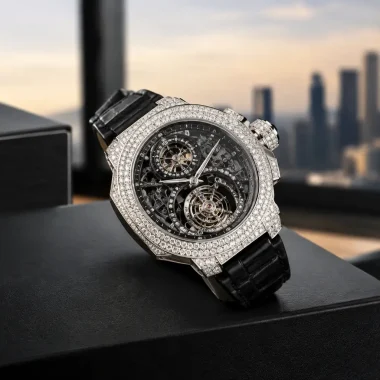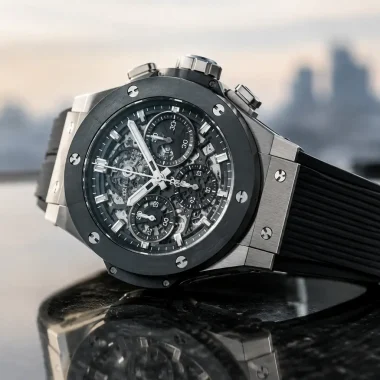
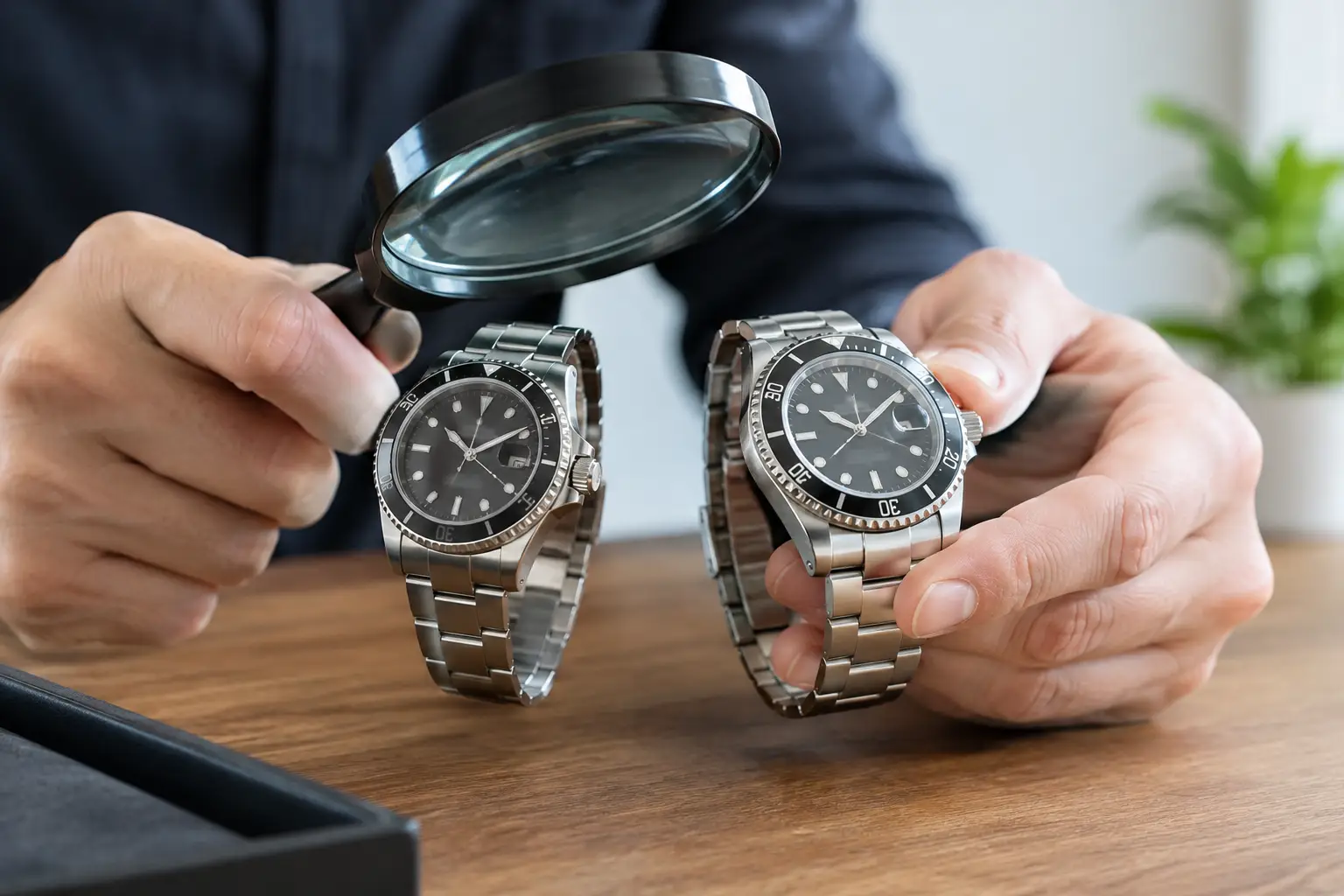
A watch can look convincing in a low-resolution listing and still fail every serious collector test once it is in hand. Knowing how to spot fake watches is not about memorizing one logo or spotting a single typo. It is about assessing the complete package: the reference, proportions, finish, movement, provenance, and the person offering it for sale.
At the level of a Rolex Daytona, Audemars Piguet Royal Oak, Patek Philippe Nautilus, or Richard Mille tourbillon, details are the product. A questionable bezel alignment, incorrect dial configuration, mismatched serial range, or incomplete service history can change the value dramatically. The smartest buyers slow down before money moves.
Start With the Exact Reference
The fastest way to expose a counterfeit is to compare it against the exact reference, not the general model family. A Royal Oak is not simply a Royal Oak. Case size, metal, dial color, bracelet configuration, caliber, production year, and regional variation all matter. The same is true for Rolex, Patek Philippe, Hublot, Jacob & Co., and every serious maison.
Ask for the full reference number and research the watch as configured. Does that reference exist in yellow gold with this dial? Was it produced with factory diamonds, or does the seller describe a custom setting as original? Does the caseback match the correct generation? A counterfeit may borrow details from several genuine versions and assemble them into a watch that never existed.
Be especially careful with highly sought-after configurations. Turquoise dials, rainbow gem settings, limited editions, off-catalog pieces, and discontinued sports references attract demand – and attract more sophisticated fakes. Rarity should be verified, not accepted as a reason to skip questions.
Examine the Dial, Case, and Bracelet
A genuine luxury watch carries precision across surfaces that many replicas only imitate at a glance. Request clear, unfiltered photos taken straight on and in natural light. One heavily edited glamour image is not enough for a high-value purchase.
The dial tells a larger story
Look closely at printing, hour markers, date windows, hands, and the alignment of every complication. Text should be clean and crisp, with balanced spacing. Applied markers should sit evenly, and luminous material should appear consistently placed. On watches with date apertures, the date should be centered and correctly magnified where applicable.
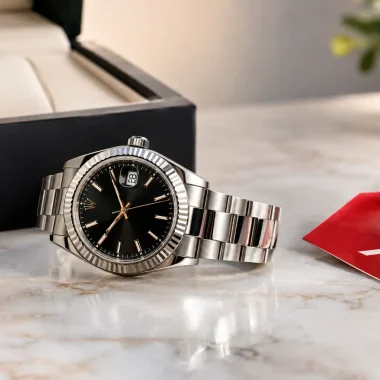
Details vary by brand and era, so avoid relying on broad rules. For example, a Rolex Cyclops lens is a useful checkpoint, but magnification alone does not authenticate a Rolex. A modern counterfeit can imitate it. The more persuasive question is whether the dial, crystal, rehaut, hands, and date presentation all agree with the specific reference and production period.
Finishing should feel expensive under magnification
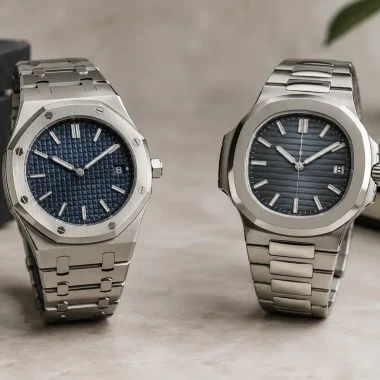
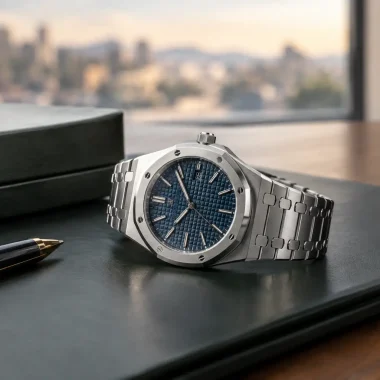
Luxury case finishing is difficult to reproduce. On a genuine Audemars Piguet Royal Oak, the contrast between brushed planes and polished bevels is sharp, deliberate, and consistent. On a Patek Philippe, case lines and bracelet transitions should feel refined rather than soft or uneven. On a Richard Mille, the layered construction, screws, and complex geometry demand exceptional execution.
Check the edges around lugs, bezel facets, crown guards, pushers, and caseback engravings. Rough machining, shallow engraving, inconsistent brushing, excess adhesive, or gaps between components are immediate concerns. Weight can help, particularly with precious-metal models, but it is never a standalone test. Counterfeiters can add mass; they cannot easily replicate factory finishing throughout the watch.
Bracelets deserve the same scrutiny. Links should articulate smoothly without feeling loose, screws should sit correctly, and clasps should close with confidence. A bracelet that rattles, pinches, or shows poor alignment can signal a problem, though a genuine vintage bracelet may naturally have wear. Condition and authenticity are separate questions.
How to Spot Fake Watches Through Movement Checks
The movement is the strongest proof, but only when examined by a qualified watchmaker or authenticator. A display caseback can be useful, yet decorative rotor engraving and visible bridges can also be replicated. Do not assume that seeing gears confirms anything.
A proper inspection compares the caliber, bridge layout, finishing, engravings, rotor, balance assembly, and movement serial information to the correct model. This matters most with complicated pieces. A fake perpetual calendar, chronograph, or tourbillon may mimic the visual design while using a simpler movement that cannot perform the claimed functions.
Function testing can expose issues before the case is opened. On a chronograph, test the start, stop, reset, and subdial behavior. On a GMT, check whether the local hour hand adjusts independently when the reference calls for it. On a perpetual calendar, do not force calendar corrections without understanding the mechanism. A watch that functions poorly is not automatically counterfeit, but it does require a closer look.
Never ask an unqualified seller to open an expensive watch just to satisfy a buyer. Improper handling can damage gaskets, screws, and delicate movements. An independent professional inspection is the right move when the value justifies it.
Treat Serial Numbers and Papers as Evidence, Not Proof
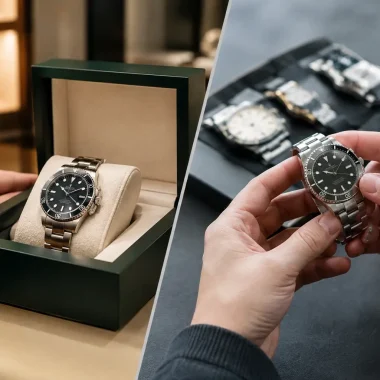
Serial numbers, warranty cards, box sets, invoices, and certificates add value and context. They do not make a watch authentic on their own. Counterfeiters reproduce cards, booklets, hang tags, and packaging with increasing accuracy. A genuine box can also be paired with the wrong watch.
Confirm that the serial number is present where it should be for that brand and era, and that its format is credible. Then check whether the paperwork matches the reference, metal, dial, and serial. A card listing a steel reference should not accompany a watch presented as factory rose gold. The dates should also make sense. A warranty card dated before a model’s release is an obvious concern.
For vintage and collectible watches, papers may be unavailable. That does not disqualify the piece. It simply raises the importance of condition, component correctness, service records, ownership history, and expert review. Conversely, a full set does not excuse a watch with wrong hands, an incorrect bezel, or a questionable movement.
Verify the Seller Before You Verify the Deal
A remarkable price can be an opportunity, but it can also be the warning. If a current-market Rolex, Patek Philippe, or Audemars Piguet is priced far below comparable examples, ask why. The explanation may be honest – condition issues, missing accessories, urgent liquidity, or an older service history – but it should be specific and supported by evidence.
Buyers should expect a professional seller to provide the reference, condition details, high-quality images of the actual watch, disclosed aftermarket modifications, and a clear return or authentication process. Vague descriptions such as “Swiss style,” “AAA,” “inspired,” or “no box due to privacy” are not collector-grade disclosures.
Private transactions require additional discipline. Confirm the seller’s identity, ask how they acquired the watch, request current timestamped photos, and meet at a reputable watchmaker or authentication facility when possible. Avoid payment methods that leave no meaningful recourse. A seller who pressures you to wire funds immediately or refuses an inspection is giving you the answer.
For sellers, transparency protects value as well. Presenting service receipts, original accessories, accurate condition photos, and a complete ownership narrative helps serious buyers move decisively. A clean, well-documented watch is easier to evaluate and easier to sell.
Know When an Aftermarket Watch Changes the Question
Aftermarket diamonds, custom dials, replacement bezels, polished cases, and non-original bracelets are not always counterfeit. They can be legitimate modifications, and some buyers actively seek bold custom pieces. The issue is disclosure.
A watch described as factory-set must have factory-set stones. A dial described as original must be original to the reference unless clearly stated otherwise. Modifications can materially affect serviceability, collector appeal, and resale value, especially with Patek Philippe, Rolex, and Audemars Piguet. Buy the watch for what it is, not what the listing language suggests it might be.
Use Independent Authentication for Major Purchases
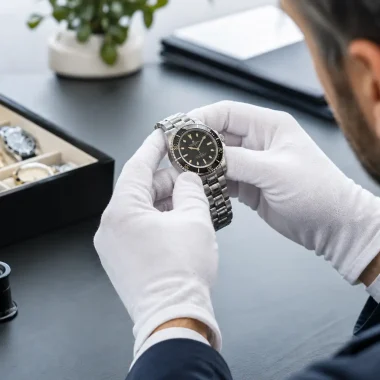
For a five-figure or six-figure purchase, professional authentication is not hesitation. It is part of collecting well. The right expert can identify incorrect components, refinished dials, replacement movements, altered serials, and subtle condition issues that photographs cannot reveal.
This is particularly valuable with rare references, vintage pieces, diamond-set watches, and complicated models. A watch can be genuine but assembled from period-correct parts that were not born together. That distinction matters to collectors and can materially affect price.
The best purchase is not merely a watch that passes a quick visual test. It is a watch whose reference, condition, components, documentation, and seller story hold together under scrutiny. When the details are right, you can wear an iconic timepiece with the confidence that real prestige deserves.