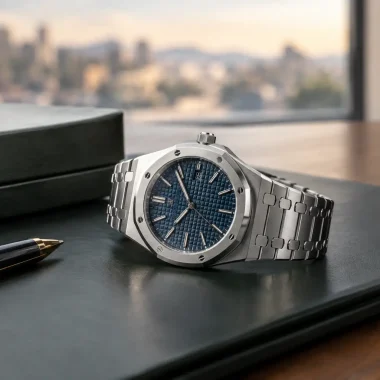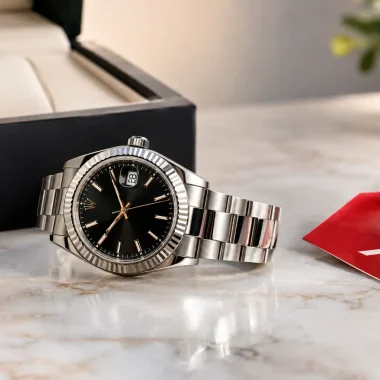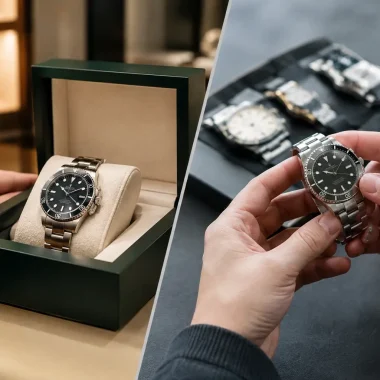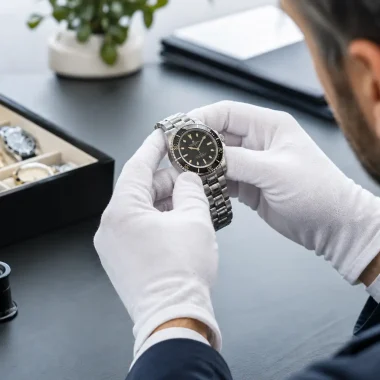
A six- or seven-figure watch can look correct at first glance and still carry a problem beneath the caseback. Understanding how watch serial numbers work gives collectors a stronger starting point when assessing a Rolex, Audemars Piguet, Patek Philippe, Richard Mille, or another high-value timepiece. It is not a shortcut to certainty. It is one of the identifiers that helps turn a watch from an attractive object into a documented collectible.
For a buyer, serial numbers connect the physical watch to its claimed production period, paperwork, service history, and, in the best cases, its ownership story. For a seller, they help establish a clean, consistent file before presenting a watch to serious buyers. The detail matters most when rarity, condition, and provenance can move the market value by thousands or far more.
What a Watch Serial Number Actually Identifies
A watch serial number is a unique or near-unique production identifier assigned by the manufacturer. It is different from a model or reference number. The reference identifies the design family: case shape, material, movement configuration, bracelet or strap arrangement, and other core specifications. The serial identifies an individual example within that family.
Think of a Rolex Submariner reference as the model specification and its serial number as the individual watch’s production identity. The same principle applies to an Audemars Piguet Royal Oak, a Patek Philippe Nautilus, or a Richard Mille tourbillon. Multiple watches can share one reference. They should not share the same serial number.
Serial formats are not universal. Some brands use chronological sequences that can help estimate an era. Others use randomized codes, internal production systems, or identifiers that do not translate neatly into a public year chart. A serial number may be letters and numbers, numbers only, or a combination of engraved and digitally recorded data.
That distinction is crucial: a serial number can support a production-era claim, but it does not always reveal an exact manufacture date. The date of sale on an original warranty card may be months or years later than the watch’s physical production.
How Watch Serial Numbers Work by Brand and Era
Collectors often want a serial number to answer one simple question: when was this watch made? Sometimes it can help. Sometimes it cannot.
Rolex serial numbers
Vintage and older Rolex serial ranges are widely used to estimate production periods. Collectors compare the sequence with known ranges, dial configurations, bracelet codes, bezel styles, and period-correct components. This is useful, but it is still an estimate rather than a factory-issued birth certificate.
Modern Rolex serials are different. Around 2010, Rolex moved to randomized serial numbers, making public serial-to-year charts far less useful. On many modern examples, the serial is engraved on the rehaut, the inner flange surrounding the dial, rather than between the lugs. Matching documentation, correct configuration, condition, and a credible source become more meaningful than trying to decode a random sequence.
Audemars Piguet, Patek Philippe, and independent makers
Audemars Piguet often uses a case number alongside reference information, while movement numbers and other internal markings may be relevant during a detailed review. With Royal Oak and Royal Oak Offshore models, collectors also evaluate caseback engravings, dial execution, bracelet construction, and reference-specific details.
Patek Philippe records case and movement information, but public serial lookup is not a substitute for factory research or archival documentation. On an important vintage Calatrava, perpetual calendar, or Nautilus, a mismatch between the movement, case, dial, and claimed period deserves immediate scrutiny.
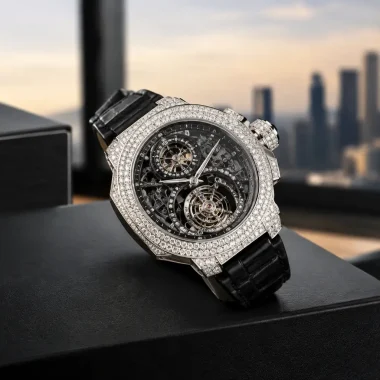
For Richard Mille, Jacob & Co., Hublot, and other contemporary high-luxury brands, serial numbers are generally best viewed as part of a complete authentication and provenance process. These watches frequently involve complex materials, limited production, proprietary case construction, and highly specific configurations. A number alone cannot verify a sapphire-cased tourbillon, gem-set limited edition, or piece-unique creation.
Where to Find the Serial Number
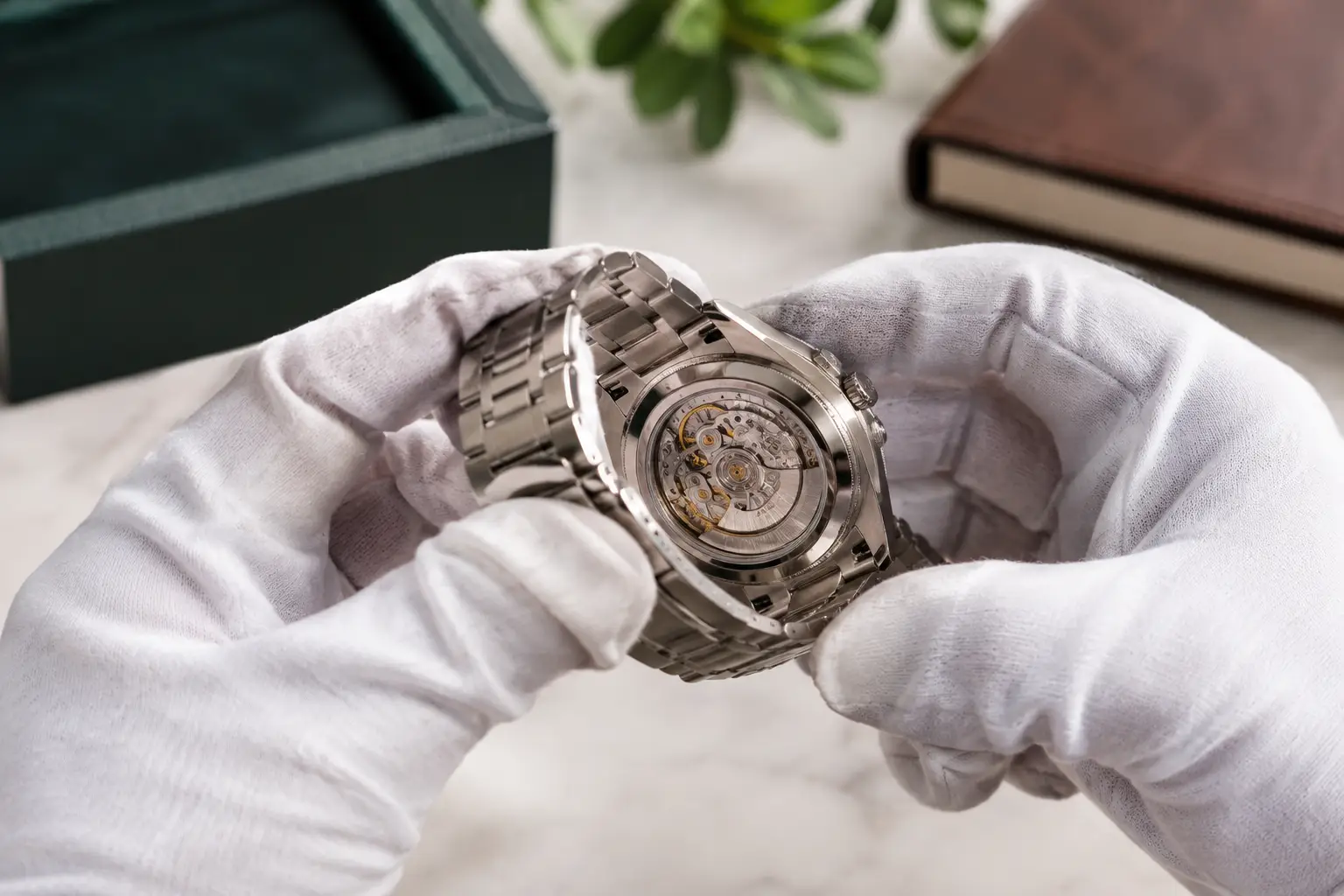
The location depends on the brand, reference, and production era. Serial numbers may appear between the lugs, on the caseback, on the rehaut, inside the case, on the movement, or on a manufacturer plaque. Some watches require bracelet removal or caseback opening to inspect every relevant identifier.
Do not force a bracelet, scratch a case, or open a complicated watch simply to locate a number. On a highly finished precious-metal or gem-set piece, careless handling can create expensive cosmetic damage. A qualified watchmaker or experienced luxury watch specialist can inspect the correct areas without compromising the watch.
Photographs matter. Clear images of the serial area, reference markings, warranty card, service papers, and original accessories help create a useful record. When sharing a watch publicly, however, consider obscuring part of the serial number. Full serial disclosure can create avoidable security and fraud concerns, especially with highly recognizable collectible watches.
What a Serial Number Can and Cannot Prove
A serial number can support consistency. It can show that the number on the watch matches the warranty card or service record. It can help establish whether a claimed production period is plausible. It may also reveal a concern if it appears altered, poorly engraved, inconsistent with the brand’s format, or duplicated across multiple listings.
It cannot independently prove authenticity, ownership, or market value. Counterfeiters understand that buyers look for serial numbers. A copied or invented number is not difficult to place on an incorrect watch. Even a genuine case number does not guarantee that every component is original to the watch.
The strongest assessment looks at the entire package: case geometry, dial printing, handsets, movement finishing, engravings, bracelet and clasp codes, gemstones, weight, materials, original papers, service history, and seller reputation. On a vintage watch, originality can be more valuable than a perfectly polished appearance. On a current-production collectible, complete factory presentation and documented condition may carry greater weight.
Serial Numbers, Papers, and Provenance
Matching papers are desirable because they create a direct connection between the watch and its documented sale. A warranty card should show the correct serial or case number where applicable, along with a believable retailer and date format. Original boxes, manuals, hangtags, certificates, and service documents strengthen the presentation, but they should also make sense for the specific reference and era.
A watch can still be authentic and highly desirable without its original papers. This is especially true for older vintage watches, estate pieces, and watches that have changed hands several times over decades. The trade-off is straightforward: absent papers often mean the buyer must place greater confidence in physical authentication, condition review, and the quality of the seller’s records.
Conversely, papers are not a free pass. Incorrectly matched cards, altered documents, or paperwork from another watch can create a false sense of security. The number, watch, and documents must agree as a complete set.
A Smarter Way to Review a High-Value Watch
Before committing to a major purchase, begin by confirming the reference and serial information against the watch itself and any accompanying documents. Then look beyond the number. Does the dial match the claimed reference? Are the case proportions and engravings correct? Does the movement belong in that model? Does the stated production era fit the bezel, clasp, bracelet, and accessories?
For limited editions, verify what the limitation actually means. A caseback marked “No. 12 of 50” is not necessarily the same as a serial number, and the presence of a limited-edition engraving does not eliminate the need for complete authentication. For diamond-set watches, confirm whether the stones are factory-set or aftermarket. Both can be beautiful, but the distinction can materially affect collectibility and resale value.
When selling, provide accurate serial documentation privately to qualified buyers or specialists, maintain clear photographs, and disclose service, replacement parts, polishing, and known condition details. Transparency protects the transaction and supports stronger pricing for watches that deserve collector attention.
A serial number is not the whole story of a watch. It is the opening line in a record that should be consistent, credible, and worthy of the timepiece on your wrist.