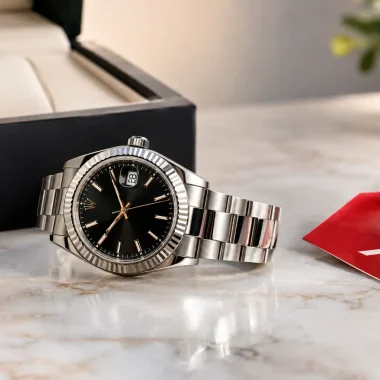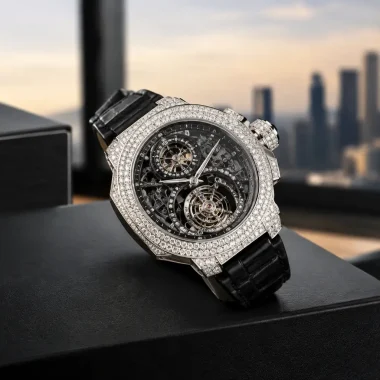

A six-figure watch deserves more than a vague promise of “top dollar.” Watch consignment fees determine what you actually receive when your Rolex, Patek Philippe, Audemars Piguet, Richard Mille, or independent masterpiece sells. The right arrangement can put your watch in front of qualified buyers and preserve its value. The wrong one can leave you waiting months for a payout that falls well below expectation.
For collectors selling rare, high-value pieces, the headline commission is only part of the calculation. The quality of the selling platform, the reserve price, the condition presentation, the buyer network, and the timing of payment all matter just as much.
How Watch Consignment Fees Usually Work
A consignment sale means the owner places a watch with a dealer or specialized marketplace, while retaining ownership until a buyer completes the purchase. The seller and consignor agree on a target price, a commission structure, a listing period, and the terms for releasing payment. Once the watch sells, the consignor receives the sale proceeds minus the agreed fees and any authorized expenses.
Most watch consignment fees are expressed as a percentage of the final selling price. Rates vary widely, but luxury watch sellers commonly encounter commissions in the 10% to 25% range. Lower percentages may be available for highly liquid watches with strong demand, such as a current-production Rolex Daytona, Patek Philippe Nautilus, or Audemars Piguet Royal Oak in exceptional condition. A rare, highly specialized, or less immediately liquid piece may command a higher commission because it requires more focused marketing, buyer outreach, photography, authentication, and negotiation.
The percentage alone does not tell the full story. A 12% fee on a strong $150,000 sale is often more attractive than an 8% fee attached to an unrealistic listing that eventually sells for $125,000. Serious sellers should focus on net proceeds, probability of sale, and the time required to close the transaction.
A Simple Net-Proceeds Example
Consider a watch that sells for $100,000 with a 15% commission. The commission is $15,000, leaving $85,000 before any separately approved costs. If the agreement includes a $500 insured shipment charge and a $250 service expense, the seller’s payout would be $84,250.
Now compare that result with a dealer offering a 10% fee but recommending an $88,000 selling price to move the watch quickly. The seller would net $79,200 before expenses. The lower fee sounds better, but the higher-quality sales strategy produces nearly $5,000 more.
What Should Be Included in the Fee
A clear consignment agreement should spell out what the commission covers. At the luxury level, a dealer’s work should extend well beyond placing a few photographs online. The fee may cover professional product photography, accurate model identification, condition review, serial and provenance checks, insurance while the watch is in custody, buyer qualification, secure payment processing, negotiations, and shipping coordination.
For a gem-set Jacob & Co., a complicated Richard Mille, or a limited Audemars Piguet collaboration, presentation is part of the value proposition. Buyers want exact references, case materials, dial details, production context, condition disclosures, included accessories, and confidence that the watch is authentic and correctly represented. A well-positioned listing can justify a stronger selling price because it reduces uncertainty for the buyer.
Ask whether any costs sit outside the stated commission. Potential extras can include return shipping if the watch does not sell, refurbishment, pressure testing, polishing, replacement packaging, escrow charges, international shipping, or authentication fees. These charges are not automatically unreasonable, but they should never arrive as a surprise after the sale.
Reserve Prices and the Risk of Overpricing
The reserve price is the lowest amount at which you authorize the watch to be sold. It protects the seller from accepting an offer that does not meet expectations. It can also become a barrier if it ignores current market conditions.
A reserve should be based on the exact watch, not merely the reference number. A full-set 2022 Rolex GMT-Master II with an unworn bracelet, original box, papers, and clean provenance is not valued the same way as an older example with significant wear and incomplete accessories. The same distinction applies to a Patek Philippe perpetual calendar, a Royal Oak Offshore, or a diamond-set Hublot. Condition, configuration, service history, dial variation, provenance, and current supply all influence the number buyers are willing to pay.
For highly collectible watches, a firm reserve can be smart. A discontinued Patek Philippe or a piece-unique independent watch may attract the right buyer only after deliberate outreach. For more common references, a reserve set too far above recent market activity can make a listing look stale. Once a watch sits unsold, buyers may assume there is a condition issue, pricing problem, or urgency on the seller’s side.
The strongest consignors remain disciplined without becoming rigid. Agree on a reserve, then establish a process for reviewing qualified offers. That creates room to respond to real demand without allowing last-minute pressure to dictate the sale.
Watch Consignment Fees vs. an Outright Sale
Consignment is not always the best route. An outright sale to a dealer gives you a defined number and faster liquidity. The dealer takes on the inventory risk, holds the watch, markets it, and waits for the eventual buyer. In exchange, its purchase offer will usually be lower than what you might net through a successful consignment sale.
Consignment generally makes sense when you own a desirable watch, can wait for the right buyer, and want exposure to a larger retail audience. It is particularly compelling for watches where presentation and collector access can create a premium: limited editions, unusual dial configurations, precious-metal references, complicated pieces, and models with original accessories and strong provenance.
An outright sale may be preferable when speed matters more than maximizing proceeds. If you are reallocating into another acquisition, settling an estate, or simply want immediate certainty, accepting a competitive direct offer can be the cleaner decision. There is no universal winner. The right option depends on the watch’s liquidity, your price expectation, and your timeline.
Questions to Ask Before You Consign a Watch
Before handing over a valuable timepiece, ask how the commission is calculated and whether it changes at certain price levels. Confirm whether the percentage applies to the final sale price, the amount above a reserve, or another figure. The agreement should also state how discounts are handled. If a buyer negotiates a lower price, can the dealer accept it without your approval?
Clarify custody and insurance. You should know where the watch will be stored, whether it is fully insured while in transit and on premises, and what happens in the unlikely event of theft, loss, or damage. Confirm whether your watch may be worn for content, shown privately, shipped to a prospective buyer, or sent to a watchmaker for evaluation.
Payout timing deserves equal attention. Some consignors are paid immediately after funds clear; others are paid only after a return window closes. For high-value transactions, payment timing should be written clearly, including the method of payment and any conditions that could delay release.
Finally, understand the exclusivity period. A dealer may ask for 30, 60, or 90 days of exclusive selling rights. That can be reasonable when the business is investing in marketing and buyer outreach, but the agreement should explain what happens if the watch remains unsold. Confirm your right to retrieve it, the notice required, and any return or administrative charge.
Preparing a Watch for a Stronger Consignment Result
The best consignment result starts before the watch is delivered. Gather the original box, warranty card, certificates, spare links, service records, purchase documentation, and any limited-edition accessories. A complete set can materially change buyer confidence and resale value, especially for Patek Philippe, Rolex, Audemars Piguet, and Richard Mille.
Be precise about condition. Honest disclosure of case marks, bracelet stretch, polishing history, aftermarket modifications, or missing components prevents a deal from unraveling after inspection. Avoid unnecessary polishing before obtaining an expert opinion. On certain collectible references, sharp original case lines and an untouched finish are more desirable than a heavily refinished surface.
At Wrist Prestige, the objective is not simply to place a watch in a listing. It is to position a serious asset with the details, imagery, and market context that discerning buyers expect. That standard matters most when the watch is rare, highly visible, or priced at a level where every detail influences confidence.
A well-structured consignment agreement should make the fee feel earned: transparent terms, controlled handling, credible exposure, and a payout that reflects the true caliber of your watch.