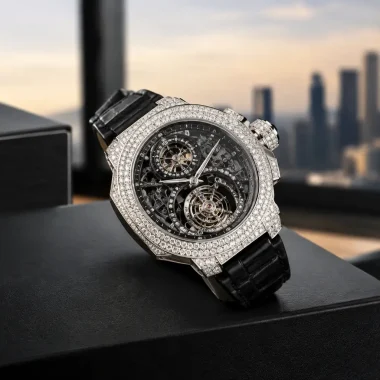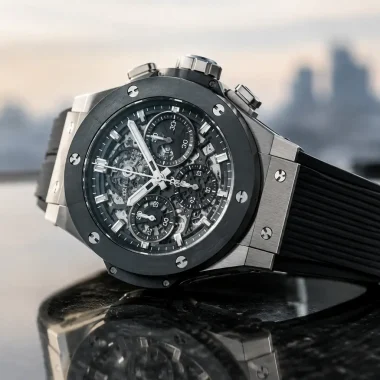
A black ceramic Royal Oak with a light mark at the clasp is not judged the same way as a full-pavé Patek Philippe with a replaced diamond or a Richard Mille with a compromised case screw. At this level, condition is not a footnote. It is part of the watch’s identity, desirability, and market value.
This pre owned watch condition guide gives collectors a clear way to assess what matters before committing to a significant acquisition. The right answer is not always “perfect.” An honest, lightly worn watch with original finishing, factory components, and a complete set can be more compelling than an over-restored example that looks new at first glance.
What Watch Condition Really Means
Condition is the combined state of the watch’s case, bracelet or strap, crystal, dial, movement, gemstones, and accompanying materials. It also includes how the watch has been treated over time: whether it has been polished, serviced, modified, refinished, or fitted with replacement parts.
For collectible luxury watches, the goal is usually preservation rather than cosmetic perfection. Factory edges on a Rolex case, the sharp transitions of an Audemars Piguet bracelet, hand-finished movement components in a Patek Philippe, and the layered architecture of a Richard Mille case are difficult to restore exactly once altered. A watch can be clean, functional, and highly presentable while still retaining the evidence of honest ownership.
Condition labels are useful, but they are not universal. One seller’s “excellent” may mean light wear with no visible damage; another may use it for a watch that has been polished and fitted with a replacement strap. Read the details behind the label.
Pre Owned Watch Condition Guide: The Core Grades
New or Unworn
A new or unworn watch has not been worn by an end user, though it may have been handled, displayed, or stored. It should show no signs of wrist wear, bracelet stretch, clasp marks, or case damage. Depending on the model, factory protective stickers may still be present, but stickers alone do not establish condition or authenticity.
For highly collectible pieces, especially limited editions and discontinued references, unworn condition can command a premium. That premium makes sense when the watch also has its original box, papers, accessories, and factory configuration. It may be less meaningful for a watch that will immediately become a daily wearer.
Like New
Like-new watches show little to no meaningful wear. A close inspection may reveal faint handling marks, but the case proportions, finishing, crystal, dial, and bracelet should appear exceptionally fresh. This grade often suits buyers who want the presentation of a new watch without relying on boutique availability.
Ask whether the watch has been polished. A careful, light factory-quality refinish is not automatically negative, but an unpolished like-new example is generally more appealing to a condition-focused collector.
Excellent
Excellent condition describes a watch with light signs of use that remain difficult to notice from normal viewing distance. Fine hairlines on polished surfaces, minor clasp swirls, and light strap wear can all be consistent with this grade.
The key distinction is that there should be no material loss to the case, no deep dents, no cracked crystal, no significant bracelet looseness, and no damage affecting function. For a luxury sport watch meant to be worn, excellent condition is often the most intelligent value point. You receive a strong example without paying an unworn premium for a watch you intend to enjoy.
Very Good
A very good pre-owned watch has visible signs of careful ownership. It may show surface scratches, more noticeable wear at the clasp, moderate strap use, or evidence of prior polishing. The watch should still be structurally sound, mechanically healthy, and visually attractive.
This category demands more scrutiny on high-value references. Minor wear can be expected, but it should not disguise rounded bezel edges, uneven brushed finishing, bracelet over-polishing, or replaced components. On a gem-set Hublot or Jacob & Co., inspect the setting quality and stone consistency just as closely as the metal surfaces.
Good or Fair
Good or fair condition generally means the watch has substantial cosmetic wear, needs service, has missing accessories, or carries issues that must be disclosed and priced accordingly. This can be the right purchase for a buyer seeking a rare reference to restore or wear without concern, but it is not the default choice for an investment-minded collector.
A lower condition grade is not necessarily a reason to walk away. Scarcity changes the equation. A rare vintage Rolex, a discontinued Patek Philippe complication, or a limited-production Audemars Piguet may remain highly desirable with visible age. The price, originality, and restoration history must reflect it.
Look Beyond the Case
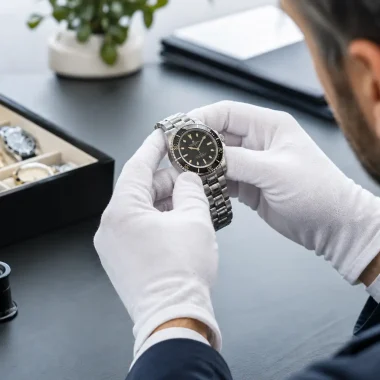
The case is where most buyers start, but it is not where the inspection should end. A complete condition review considers the details that affect both ownership and resale.
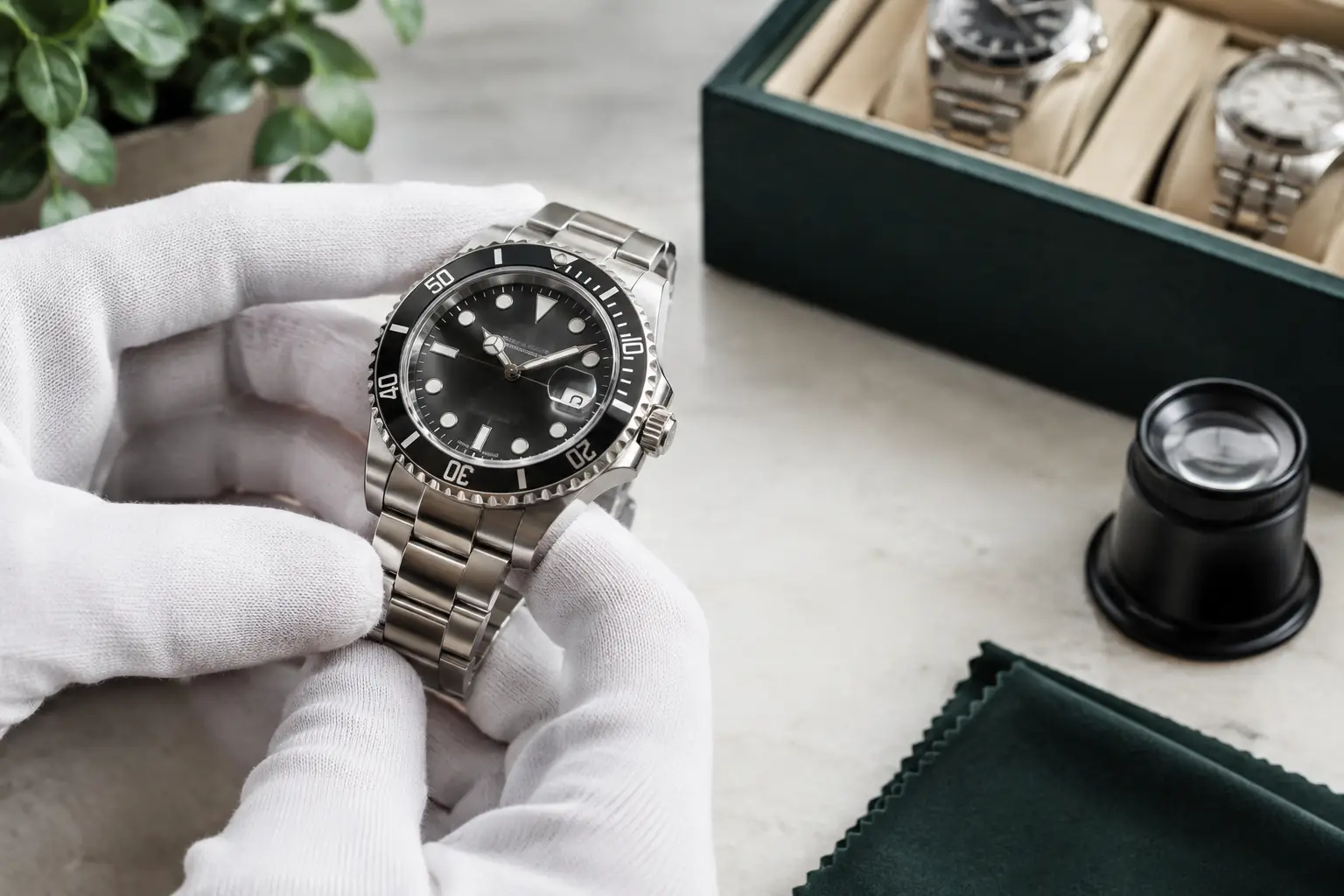
- Case and bezel: Look for dents, deep scratches, softened edges, uneven polishing, and mismatched finishes. Crisp geometry matters on iconic sport watches.
- Crystal and dial: Check for chips, cracks, moisture damage, dial spotting, discoloration, loose markers, and damaged luminous material. Original dials can carry major collector value.
- Bracelet, clasp, and strap: Review bracelet stretch, link damage, clasp function, strap condition, and buckle wear. Original bracelets and buckles are particularly important.
- Movement and functions: Confirm that the watch winds, sets, runs, and performs every complication correctly. Chronographs, annual calendars, perpetual calendars, and tourbillons require specialized assessment.
- Gem setting and precious metal: Inspect stone alignment, missing gems, loose settings, excessive metal loss, and repairs that disrupt the factory pattern.
High-resolution images help, but images cannot fully reveal timing performance, water resistance, internal corrosion, or the feel of a bracelet. For a significant purchase, condition should be supported by knowledgeable evaluation, clear disclosures, and a service record when available.
Polishing: The Trade-Off Collectors Should Understand
Polishing is one of the most misunderstood topics in the pre-owned market. A professionally refinished watch can look outstanding. It can also lose the sharp lines, original dimensions, and alternating brushed and polished surfaces that define the model.
A single careful polish may have minimal impact, particularly on a modern watch designed to be worn. Repeated or aggressive polishing is different. It can round a Rolex lug profile, flatten engraved hallmarks, soften an AP bezel, or blur the intentional contrast in a complex case design.
There is no universal rule that an unpolished watch is always superior. It depends on the reference, the severity of wear, the quality of prior work, and your purpose for buying. Collectors often prioritize untouched originality. Buyers focused on immediate presentation may prefer an expertly refinished piece. The premium should follow the reality of the watch, not just the shine of a listing photograph.
Original Parts, Service Parts, and Modifications
Originality becomes more important as rarity and collectibility rise. Factory replacement parts can be necessary during service and may be entirely appropriate for a modern watch intended for regular wear. Still, they can affect value when an original dial, bezel, hands, bracelet, or clasp has been replaced.
Aftermarket modifications deserve particular caution. Non-factory diamonds, custom dials, altered bezels, replacement screws, or modified cases may dramatically change desirability and resale liquidity. They can also complicate future service. A custom piece may be visually powerful, but it should be valued as a modified watch, not as a fully original factory configuration.
Ask direct questions: Which components are original? Has the watch been refinished? When was it last serviced? Were any parts replaced? Clear answers protect the buyer and establish a cleaner basis for future resale.
Completeness Adds Confidence
A complete set typically includes the original presentation box, warranty card or papers, manuals, tags, extra links, and model-specific accessories. On certain limited pieces, this may extend to certificates, special packaging, tools, loupe sets, or numbered documentation.
Box and papers do not change the physical condition of the watch, but they can materially affect market demand. They provide stronger provenance, make the watch easier to sell later, and help distinguish a collector-grade example from a watch acquired strictly for wear. For six-figure watches, completeness is rarely an afterthought.
Do not reject every watch without papers. Older references often lost their original materials over decades, and an exceptional watch-only example can still be a smart acquisition. The missing set should simply be reflected in price and future resale expectations.
Match the Condition to the Way You Collect
The best condition grade is the one that aligns with your objective. If you want an immediate-wear Rolex GMT-Master II, excellent condition with honest clasp marks may offer the right balance of price and presentation. If you are pursuing a limited Richard Mille or a rare Patek Philippe for a long-term collection, original condition, low wear, and full-set status may matter far more.
Before you buy, decide what you will not compromise on. It may be an untouched case, a factory dial, complete documentation, or a recent service from the brand. A focused standard turns a beautiful watch into a confident acquisition, and gives it the kind of provenance serious collectors recognize long after the first wrist shot.