A six-figure watch offered below its listed price gets attention for a reason. For collectors, luxury watch discounts are not simply a chance to spend less. They can be the difference between securing an immediate-wear icon and missing a rare reference while waiting for the market to move.
The right discount adds value without changing what makes the watch desirable: the correct reference, strong condition, meaningful provenance, complete accessories, and the presence that made you want it in the first place. The wrong one can signal a compromised set, an overambitious prior asking price, or a model whose market has softened more than expected.
What Luxury Watch Discounts Actually Mean
A discount on a luxury timepiece needs context. In conventional retail, a percentage reduction is usually measured against a manufacturer’s suggested retail price. In the collectible watch market, the more relevant number may be the current market value. A Rolex Daytona, Audemars Piguet Royal Oak, Patek Philippe Nautilus, or Richard Mille can trade above, near, or below retail depending on reference, metal, dial, production status, and demand.
That means an attractive listed reduction does not automatically make a watch a compelling purchase. A $25,000 reduction on a diamond-set model is meaningful if the resulting price is aligned with recent demand for that exact configuration. It is less meaningful if the original price was set well above the prevailing market.
For serious buyers, the question is not only, “How much is off?” It is, “What am I acquiring at this price?” A discontinued precious-metal reference with a full set, sharp case lines, and desirable dial can be more compelling at a modest discount than a heavily reduced watch with replacement parts or unclear history.
Where the Best Watch Discounts Tend to Appear
Discount opportunities often emerge where rarity and buyer preference do not perfectly overlap. The watch may be highly valuable but more specialized: a larger case size, a bold gem-set execution, an uncommon material, or a complicated piece that commands a narrower collector audience.
Pre-owned inventory can also create genuine opportunities. A watch in excellent condition may offer immediate access and meaningful savings compared with an unworn equivalent, particularly when the full box, papers, and original accessories are included. For a collector who intends to wear the piece, that difference can be especially rational.
Timing matters as well. Sellers may be rotating collections, reallocating capital, or seeking liquidity for another acquisition. A two-sided marketplace creates natural moments when exceptional pieces come to market at prices designed to move. This is where a buyer prepared to act can have an advantage over someone who begins research after the watch is already gone.
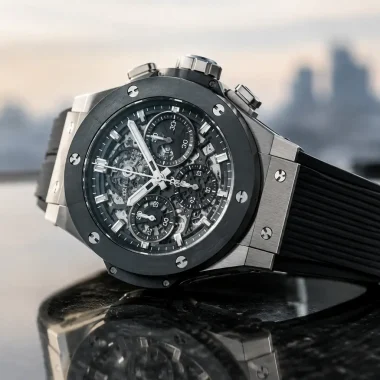
The strongest opportunities are rarely generic. They tend to be specific: a limited Hublot with a sought-after case material, an Audemars Piguet Offshore in a discontinued colorway, a Patek Philippe complication with a complete set, or a Jacob & Co. statement piece that is difficult to locate in comparable condition.
How to Judge a Discount Before You Buy
Start with the exact reference, not the family name. “Royal Oak” or “Daytona” is too broad to establish value. Case material, diameter, dial color, bracelet or strap configuration, factory gem setting, movement, production year, and condition can materially change pricing.
Then assess whether the discount is being measured against retail, a prior asking price, or the current market. Each comparison can be useful, but they tell different stories. Retail helps illustrate access to a new watch. A prior asking price shows the present opportunity on that listing. Current market context helps determine whether the piece is priced intelligently for its configuration and condition.
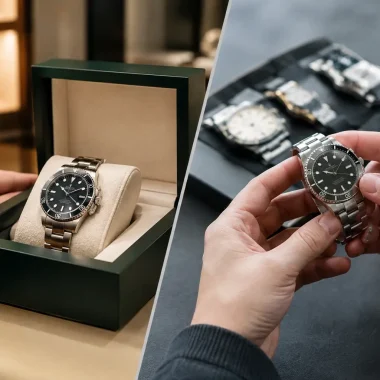
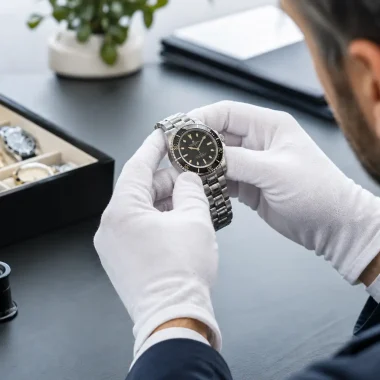
Condition deserves the same attention as price. Examine whether the watch is described as new, unworn, like new, or pre-owned. Ask what is included with the purchase and whether the watch retains its original box and papers. For collectible pieces, a complete set can support buyer confidence and future resale appeal. Factory components matter too. Original dials, bezels, bracelets, buckles, and gemstone settings generally carry more weight than later alterations.
A lower price can be entirely appropriate when the watch has visible wear, has been extensively polished, lacks papers, or has aftermarket modifications. None of those factors automatically makes a piece unworthy of purchase. They simply need to be reflected in the price and understood before the transaction.
The premium is often in the details
Two watches can look nearly identical in photographs and have dramatically different collector appeal. A rare dial variation, a full bracelet, a matching set of documentation, or clean unpolished edges may justify a higher price. Conversely, a discounted example may offer the better value if those details are less important to how you plan to own it.
If the goal is wrist time and visual impact, an excellent pre-owned watch without every original accessory may be the correct choice. If the goal is long-term collecting, future liquidity, or building a reference-driven collection, completeness and originality deserve a larger share of the budget.
Discounted Does Not Mean Less Exclusive
Luxury buyers often confuse price reduction with reduced status. That assumption does not hold in the high-watch market. A watch remains rare because of its production, design, technical complexity, and cultural relevance, not because its seller refuses to adjust the price.
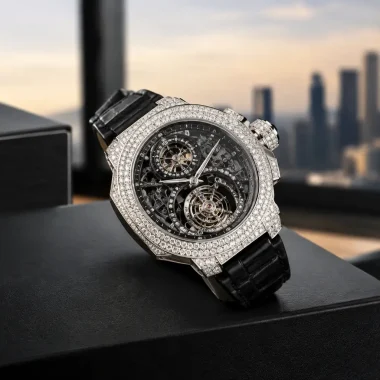
A tourbillon remains a tourbillon. A limited-edition Richard Mille remains difficult to replace. A factory diamond-set Rolex retains the craftsmanship, material value, and visual authority that define the model. A sensible discount may simply reflect a decisive seller or a platform making inventory accessible now rather than holding it indefinitely.
This is particularly relevant for buyers who value immediate availability. Boutique allocation can be slow, selective, and uncertain. A discounted watch that is physically available, clearly described, and ready to ship has value beyond the price tag. It removes the waitlist from the equation.
Build a Buying Standard, Not a Wish List
The fastest way to make a poor luxury purchase is to chase the largest percentage reduction. Establish your standard before you browse. Decide whether you are buying for collecting, daily wear, special events, investment-minded ownership, or a combination of all four.
For a daily-wear steel sports watch, comfort, serviceability, and overall condition may be the priorities. For a high-complication dress piece, movement pedigree, dial preservation, and provenance may matter more. For a bold, gem-set statement watch, factory execution, stone quality, and the confidence of the design may outweigh conventional resale considerations.
Set a price range, but leave room for a superior example. The right watch at a smaller discount can be the stronger acquisition if it is complete, correctly configured, and difficult to source. At the same time, do not pay a premium merely because a reference is famous. The market rewards discernment, especially at higher price points.
When a Discount Should Make You Pause
There are moments when a price that seems unusually favorable requires more diligence. Be cautious when a listing lacks precise reference information, has vague condition language, uses limited images, or does not clearly identify included accessories. The higher the price, the more specific the description should be.
Also separate market weakness from opportunity. Some models decline because speculative demand cooled after a sharp run-up. That can create a worthwhile entry point for a buyer who genuinely loves the watch. It can be less appealing for someone expecting a quick resale gain. Luxury watches can be powerful collectible assets, but no reference is immune to changing tastes, production decisions, or broader market conditions.
Seller confidence matters. A specialized luxury platform should make the watch, condition, price, and transaction process easy to understand. At Wrist Prestige, the advantage is direct access to curated, high-value inventory with clear product-level pricing, allowing buyers to evaluate the piece rather than chase vague promises.
Buy the Watch You Would Keep
The most satisfying luxury watch discounts are not trophies for finding a lower number. They are opportunities to acquire a watch you would still want if the market moved tomorrow. Choose the reference that fits your collection, verify the details that protect its value, and move with purpose when an exceptional piece becomes available at the right price.
A remarkable watch does not need to be full price to make a full statement.